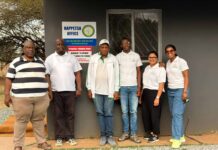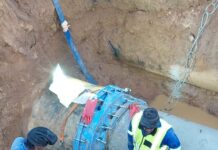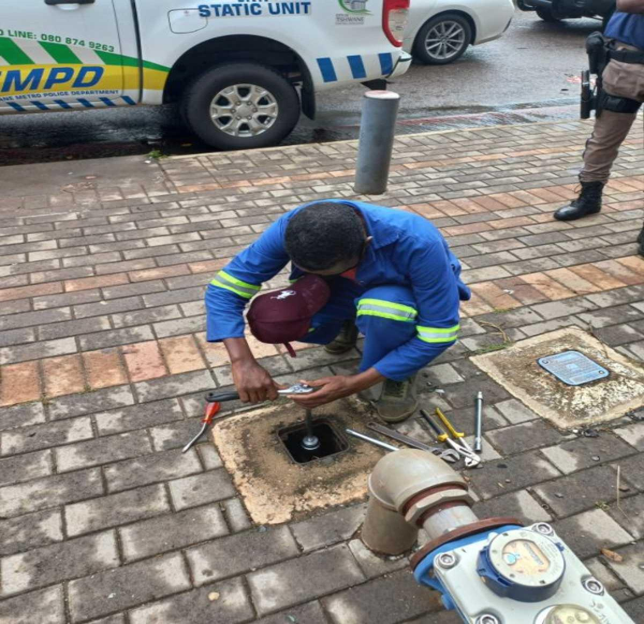
The City of Tshwane has disconnected an illegal water connection at a student accommodation facility in Soshanguve as part of ongoing efforts to curb unauthorised utility consumption and recover lost municipal revenue.
According to the city’s Member of the Mayoral Committee (MMC) for Utility Services, Frans Boshielo, the operation targeted a student accommodation facility comprising 104 rooms, where an illegal water connection was identified and disconnected.
The action forms part of the municipality’s broader campaign against illegal water and electricity connections across Tshwane.
The city estimates that unauthorised water consumption is costing it more than R248 million annually. Based on its April 2026 water balance, Tshwane reported losses of approximately 16.5 million kilolitres of water per year due to illegal connections and other forms of unauthorised consumption.
“The entire city is affected by illegal connections and unauthorised consumption,” the municipality said in response to media enquiries.
However, the city indicated that the problem is particularly severe in Regions 1, 2, 4, 5, 6 and 7.
Spokesperson of the City, Mr Lindela Mashigo, warned that residents found responsible for illegal connections could face enforcement action in accordance with the City of Tshwane Credit Control and Debt Collection Policy and the city’s Water By-law.
He said offenders are dealt with under Section 35 of its Credit Control and Debt Collection Policy and relevant provisions of the Water By-law governing illegal connections and unauthorised consumption.
While the city continues to intensify enforcement measures, it also pointed to support programmes available to households struggling to afford municipal services.
Qualifying households receive 12 kilolitres (12 000 litres) of water free every month, while indigent residents may qualify for additional assistance through the City’s Indigent Support Programme. The municipality said it also offers various relief measures and incentives to help residents maintain access to basic services.
The crackdown comes amid ongoing concerns about water losses, infrastructure strain and the financial impact of illegal utility connections on municipal service delivery.
Community organisations and residents are encouraged to report illegal connections and engage with the municipality’s assistance programmes where affordability remains a challenge.